
 eCom
eCom Visitor experience
.svg) Marketing
Marketing Insights
 Platform
 Integrations
 Themepark
 Zoo
Zoo Museum
 Waterpark
 Convious Library
 Blog
Blog eBooks
 Magazine
 Success Stories
 Webinars
 Videos
 About Convious
 Contact
 Press & Media
If the words "AI marketing" make you want to close the tab, stay with us. This is not a tech lecture, and you do not need to change everything. The change is smaller and more familiar than it sounds.
Here is what is happening, in plain terms. Some visitors planning a family day out have started asking ChatGPT instead of, or alongside, searching Google. They type something like "best theme park near Manchester for young kids", and ChatGPT replies with a few suggestions in a sentence or two each. If your park is one of the names it mentions, you are in front of that family at the very start of their planning.
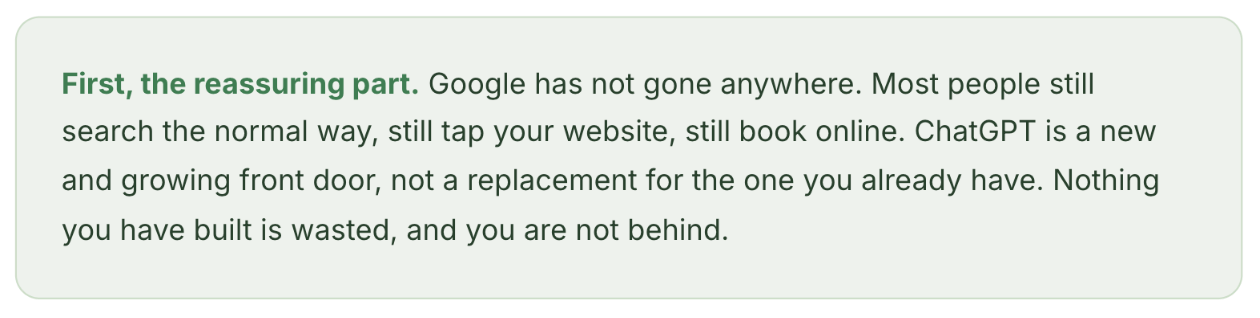
So this is not about chasing the latest thing. It is about making sure that when someone does ask an AI where to take the kids on Saturday, your park has a fair chance of being mentioned. And the good news is that the things that help with ChatGPT are mostly the same things that have always helped you: clear information and happy visitors talking about you.
What does and does not count
There is a lot of noise about AI marketing, and most of it overcomplicates things. For an attraction park, it comes down to a short, sensible list. Here is what actually moves the needle, and what to ignore.
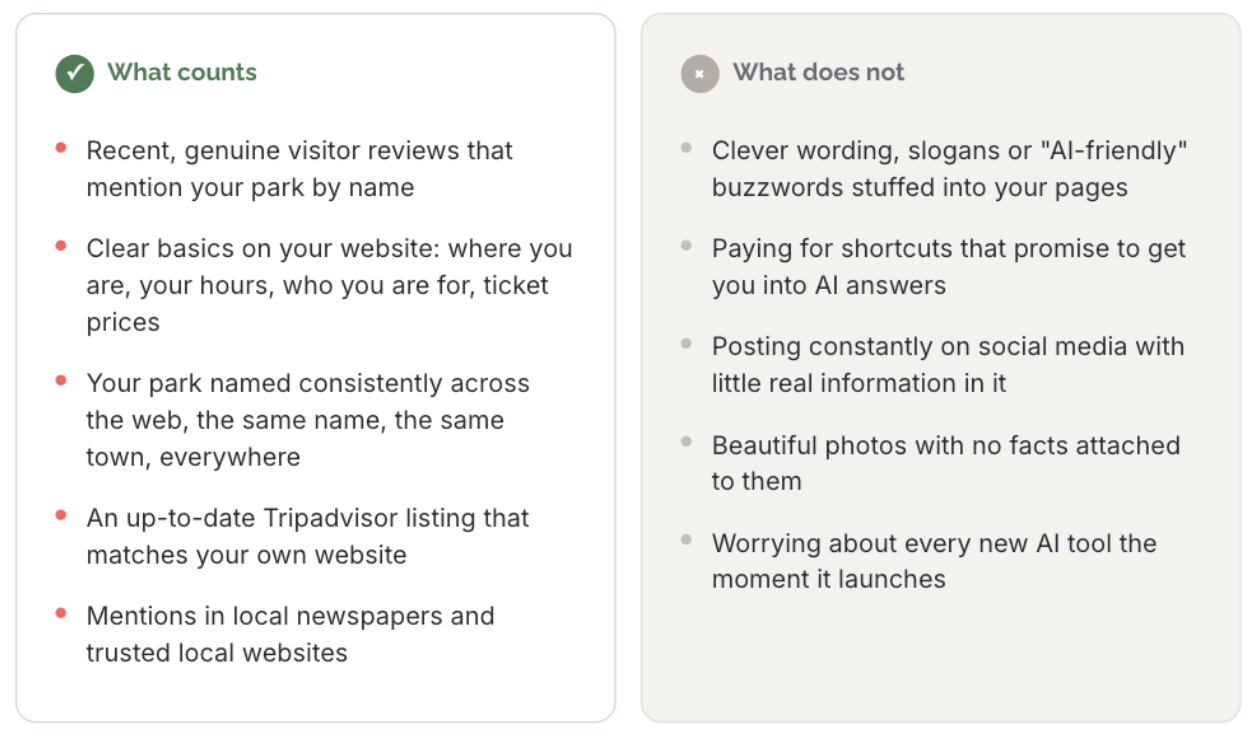
Look at the left-hand column again. There is no jargon in it. It is the same advice a sensible person would have given you ten years ago: be clear about what you offer, and look after your reputation. ChatGPT has simply made that advice matter even more.
ChatGPT cannot visit your park. It can only repeat what the web already says about you. So the question is: what does the web say?
AI loves reviews
If you do one thing, look after your reviews
This is the part to underline. When ChatGPT decides which parks to recommend, reviews carry enormous weight. They are independent, they are recent, and they describe the real experience in the words of real visitors. That is exactly the kind of evidence an AI trusts when it picks who to name.
Think about it from ChatGPT's side. It will not recommend a park it cannot vouch for. A wall of recent, detailed, positive reviews is the clearest possible signal that your park is real, well run and worth a family's Saturday. A thin or stale review page leaves it with nothing to stand on, so it names a competitor who has more to show.
And reviews do double duty. The same reviews that help ChatGPT name you are the ones that convince a parent to compare two parks on Google. You are not doing AI work and reputation work separately. They are the same work.
Best of all, this is something you already know how to do. Asking happy visitors to leave a review, replying to the ones you get, keeping your Travel Media Platform (like TripAdvisor) page current, these are not new skills. They are good hospitality, and they happen to be the strongest thing you can do for AI visibility too.
Google and ChatGPT, side by side
You do not have to choose between them, and you should not try to. They sit next to each other in how a family plans a day out, and the same groundwork serves both.
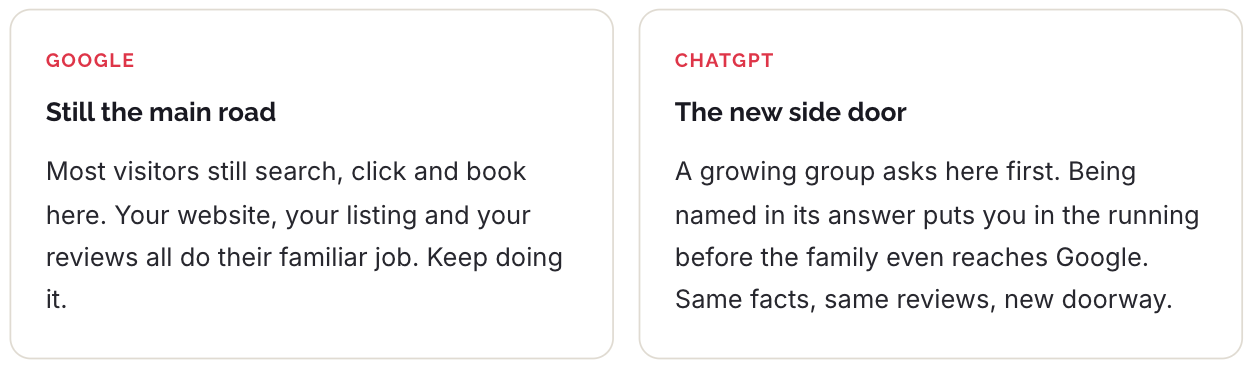
Notice that both columns rest on the same foundations: clear facts and strong reviews. You are not running two campaigns. You are making sure one reputation shows up in two places.
Your one action this week
Ask for reviews, on purpose
Forget everything else for now. This week, set up one simple, repeatable way to ask happy visitors for a review. That single habit does more for your AI visibility, and your ordinary reputation, than anything else on this page.
Pick one moment to ask: a follow-up email after a visit, a sign at the exit with a QR code, or a line from staff at the gate.
Point people to one place, most likely Tripadvisor or Google, so your reviews build up where they count.
Reply to the reviews that come in, the good and the critical. It shows you are present and real.
That is the whole task. One way to ask, every week, from now on. Everything else can wait.
When you are ready to make the rest of your booking and visitor experience just as clear and consistent, that is where we can help.


Convious is an AI-driven, all-in-one e-commerce platform specifically designed for the leisure and attractions industry, such as theme parks, zoos, and museums. It enables operators to manage ticketing, dynamic pricing, and visitor engagement in one place to increase conversions and enhance the guest experience from booking to visit. With our eCom, Self-service Kiosks, and Point-of-Sale solutions, we turn first-time visitors into long-time loyals.
Share what you love


